Santorini: the most photographed cliff in Europe, and the hardest to build on
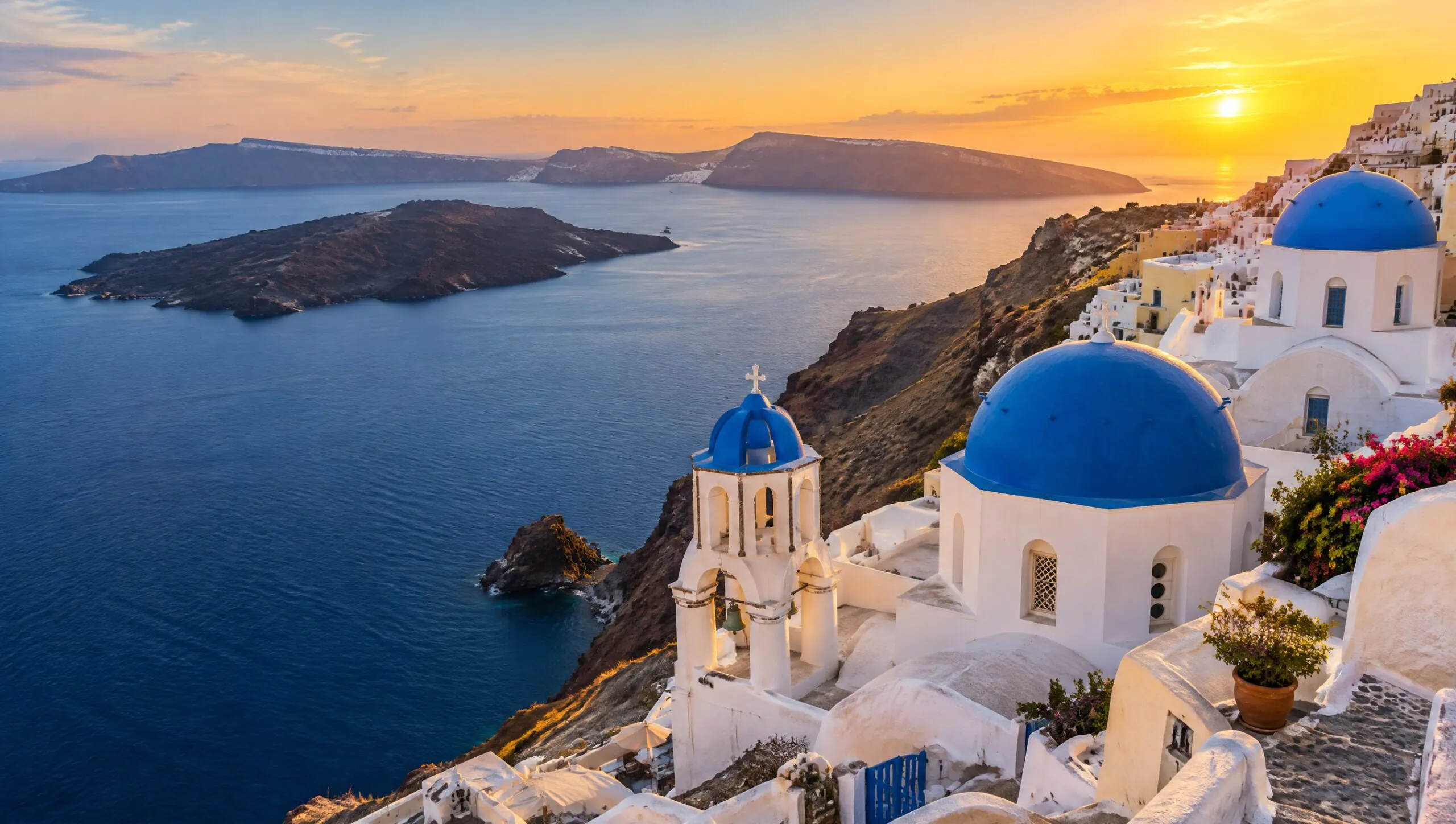
Santorini is the rim of a volcano that blew its centre out around 1600 BC and left a crescent of cliff standing three hundred metres above the water. Everything about owning property here follows from that single geological fact: the views are unmatched, the land is almost vertical, and there is very little of it.
We currently list 3 properties in Santorini.
The caldera, and the island behind it
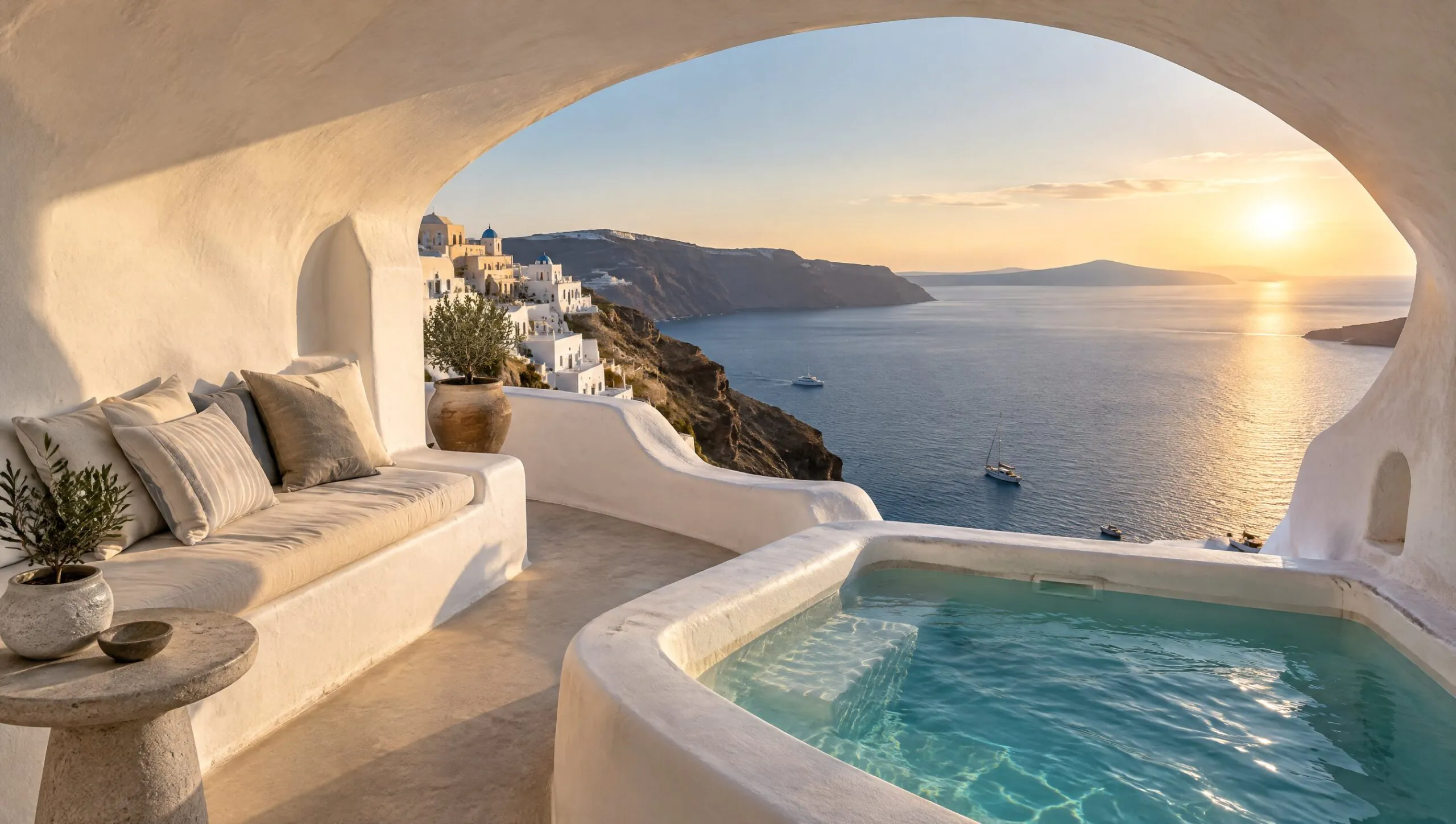
The west side of Santorini is the caldera rim: Fira, Firostefani, Imerovigli and, at the northern tip, Oia. This is the Santorini of the photographs — whitewashed houses cut back into the pumice, barrel-vaulted roofs, blue domes, and a drop to the sea that makes a terrace feel like a balcony on a ship.
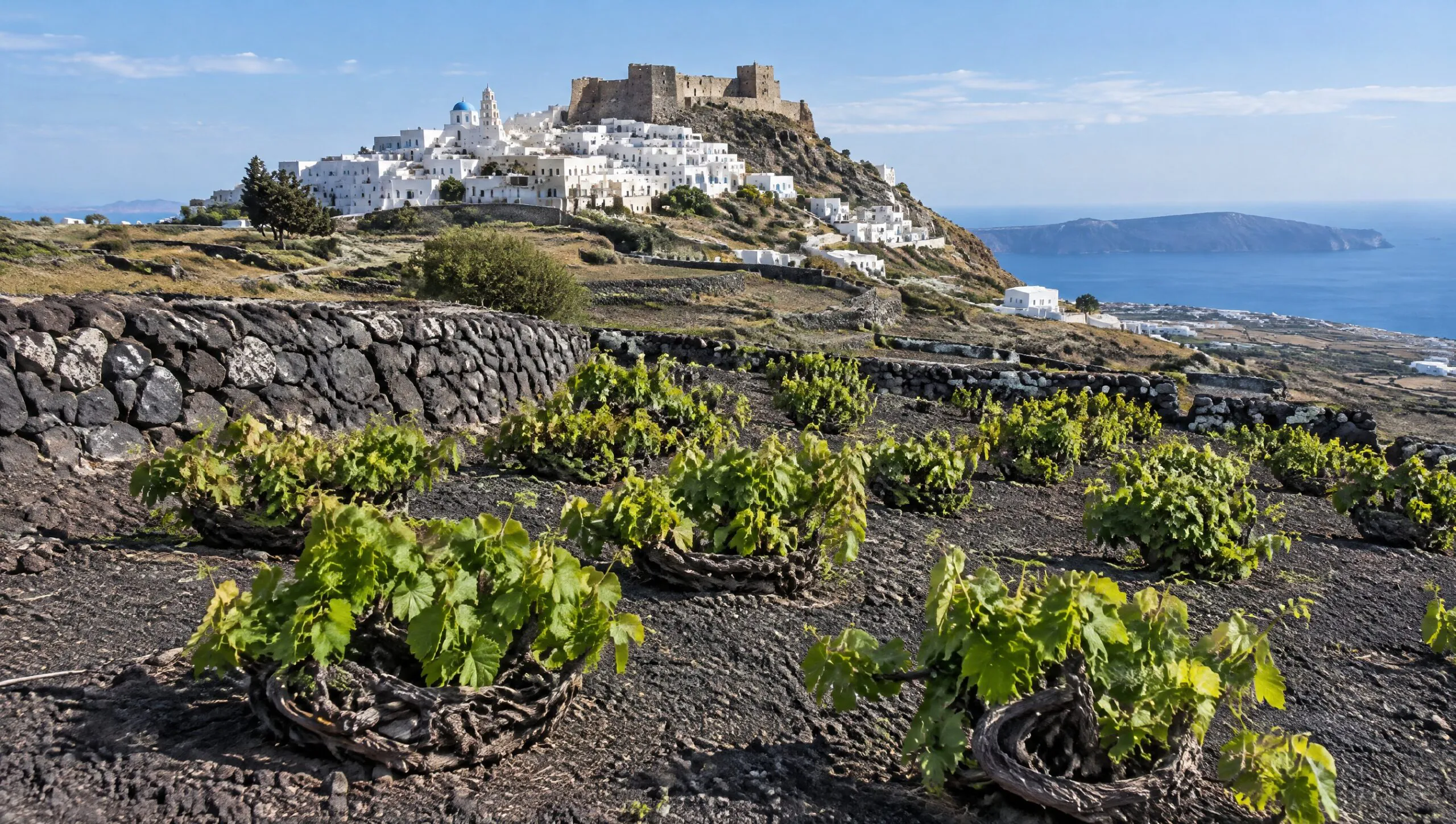
The east and south are a completely different island: gentle, agricultural, black volcanic sand at Kamari, Perissa, Perivolos and Vlychada, and vineyards growing low in baskets to keep out of the wind. Inland sits Pyrgos, the old capital, and Megalochori, both of them villages where Santorinians still live.
The traditional dwelling here is the yposkafo — the cave house, dug horizontally into the soft volcanic rock, cool in August and warm in February. Restored well, it is the most desirable asset on the island.
Getting there, and the summer crush
Santorini airport takes direct European flights from spring to autumn and connects through Athens year-round. The fast ferry from Piraeus takes about five hours; the conventional overnight boat is slower and cheaper. There are frequent links to Mykonos, Naxos, Paros and Crete, which makes the island easy to combine with others.
What you should know before buying is the cruise traffic. Santorini receives an extraordinary number of day visitors in high season, concentrated in Fira and Oia between late morning and sunset. Owners manage it by choosing where they buy, and by using the house in the shoulder months, when the island is at its best.
Which part of Santorini to choose
Oia. The northern tip and the sunset address, and the highest prices on Santorini by a wide margin — though not the highest in the Cyclades, which is still Mykonos. Almost nothing comes to market and almost nothing can be added to it.
Imerovigli and Firostefani. The highest part of the rim, immediately above Fira, with the same caldera view and a quieter street. The best balance on the west coast between view, access and price.
Fira. The island’s town: shops, banks, the cable car and the busiest streets in Greece in August. Apartments here let strongly and live noisily.
Pyrgos and Megalochori. Inland, elevated, genuinely Greek villages with mansions and courtyards. No caldera edge, far lower prices, and the most liveable part of the island.
Vlychada and Akrotiri. The south: black sand, the Minoan excavation, the marina. Modern villas on open land, and the easiest place on Santorini to build something new.
Kamari and Perissa. The long east-coast beaches, with the most conventional holiday stock and the softest prices. A rental proposition rather than a trophy.
Finikia and Exo Gonia. Small inland villages near Oia and Pyrgos respectively, where buyers go when the rim is beyond reach. Quiet, improving, and still affordable by Santorini standards.
Why buyers choose Santorini
Because the asset is unrepeatable. There is one caldera, the buildable edge of it is finite, and the planning rules protecting it are strict and well enforced. A caldera house is the closest thing in Greek property to a limited edition, and the market treats it accordingly.
The second reason is rental performance. Caldera suites earn nightly rates that look like hotel rates, because effectively they are hotel rates. Occupancy from May to October is high and pricing power is real.
The investment case, stated plainly
Santorini has nightly rates among the highest in Greece and the tightest buildable supply of any Greek island. Values on the rim have been resilient through every recent downturn, because the people who buy there are not buying with a mortgage and are rarely forced to sell.
The 2026 figures show how sharply this island splits in two. Luxury stock asks a median of roughly €13,943 per square metre, up about five per cent on the year, with the top of the market near €25,000 — second only to Mykonos in Greece. Typical Santorini housing asks about €2,363, and blended island asking prices actually slipped by between one and six per cent. The two numbers are not in conflict: they are the caldera and the rest of the island, and they are effectively separate markets.
One statistic captures the whole argument of this page. The median luxury property on Mykonos is around 270 square metres and eight years old. On Santorini it is about 170 square metres and more than sixteen years old — smaller and much older, because here you cannot simply build a new one. That is the scarcity you are paying for, and it is also why renovation skill matters more on Santorini than anywhere else in Greece.
The honest caution is that everything here is harder and more expensive to build. Materials come by ferry, the sites are vertical, the archaeological service must be satisfied, and the planning rules on the rim are the strictest in Greece. A renovation that would take six months elsewhere takes a year here and costs more per square metre than Athens. Budget for that before you fall for a ruin with a view.
The second caution is water. Santorini has no natural fresh water worth the name and depends on desalination; drought summers put real pressure on supply. Ask what a property’s water arrangement actually is, and what it costs.
Questions we get about Santorini
Is Santorini in the higher Golden Visa band? Yes, and the regional unit of Thira is named explicitly. The €800,000 threshold applies, with a 120 m² minimum. A €250,000 route survives for commercial-to-residential conversions and listed-building restorations, which on this island is worth examining carefully rather than assuming. We check the current text against the specific property.
Can I build or extend on the caldera rim? Rarely, and never casually. The rim is subject to strict height, volume and appearance controls, and much of it is additionally protected. Treat any claim that a rim plot is buildable as unproven until a Greek engineer confirms it in writing.
Is a cave house a good idea? Structurally they are excellent when properly maintained, but they need ventilation and damp management and they cannot simply be extended. Have one surveyed by someone who has worked on them before.
How long does a purchase take? Ten to fourteen weeks is typical, longer than most of Greece, because archaeological and planning clearances take time on this island.
Can I rent it out legally? Yes, with a registration number from the Greek tax authority, obtained before you advertise.
Buying in Santorini
Every property below has been seen by someone on our team. On Santorini the questions that matter are what can be built, what the water arrangement is and how the view is protected — and we ask all three before we list anything.
Browse what is available below, or tell us which part of the island you have in mind.
Currently for sale in Santorini
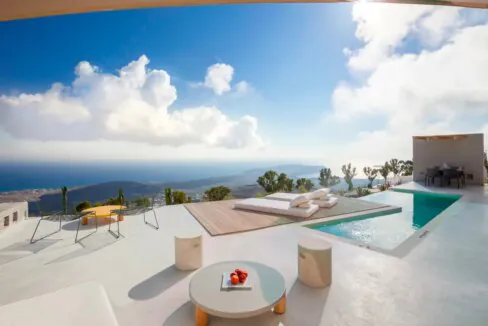 Golden Visa Eligible
 Golden Visa Eligible
 Golden Visa Eligible
 Homes for Sale GreeceAI concierge