Halkidiki: three peninsulas, an hour from a city that never closes
Halkidiki is a hand of three peninsulas reaching south from Thessaloniki into the Aegean. Two of them you can buy on. The third is Mount Athos, a self-governing monastic republic that has been closed to women for a thousand years and is not, under any circumstances, available.
What distinguishes this coast from the Greek islands is not that it is cheap — parts of it are no longer cheap at all — but that it belongs to a city. Thessaloniki is an hour away with a year-round international airport, and the motorways north mean a large share of this market arrives by car.
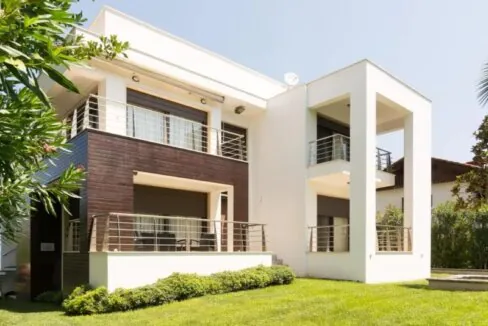
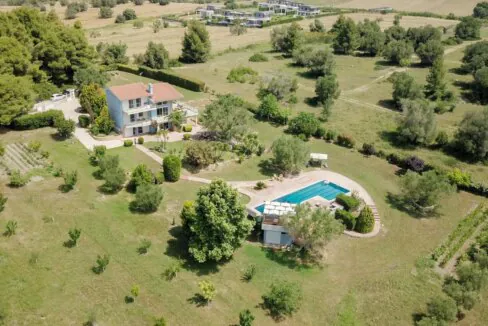
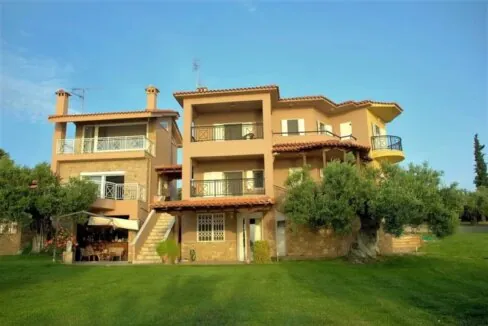
We currently list 4 properties in Halkidiki.
Kassandra and Sithonia, which are not alike
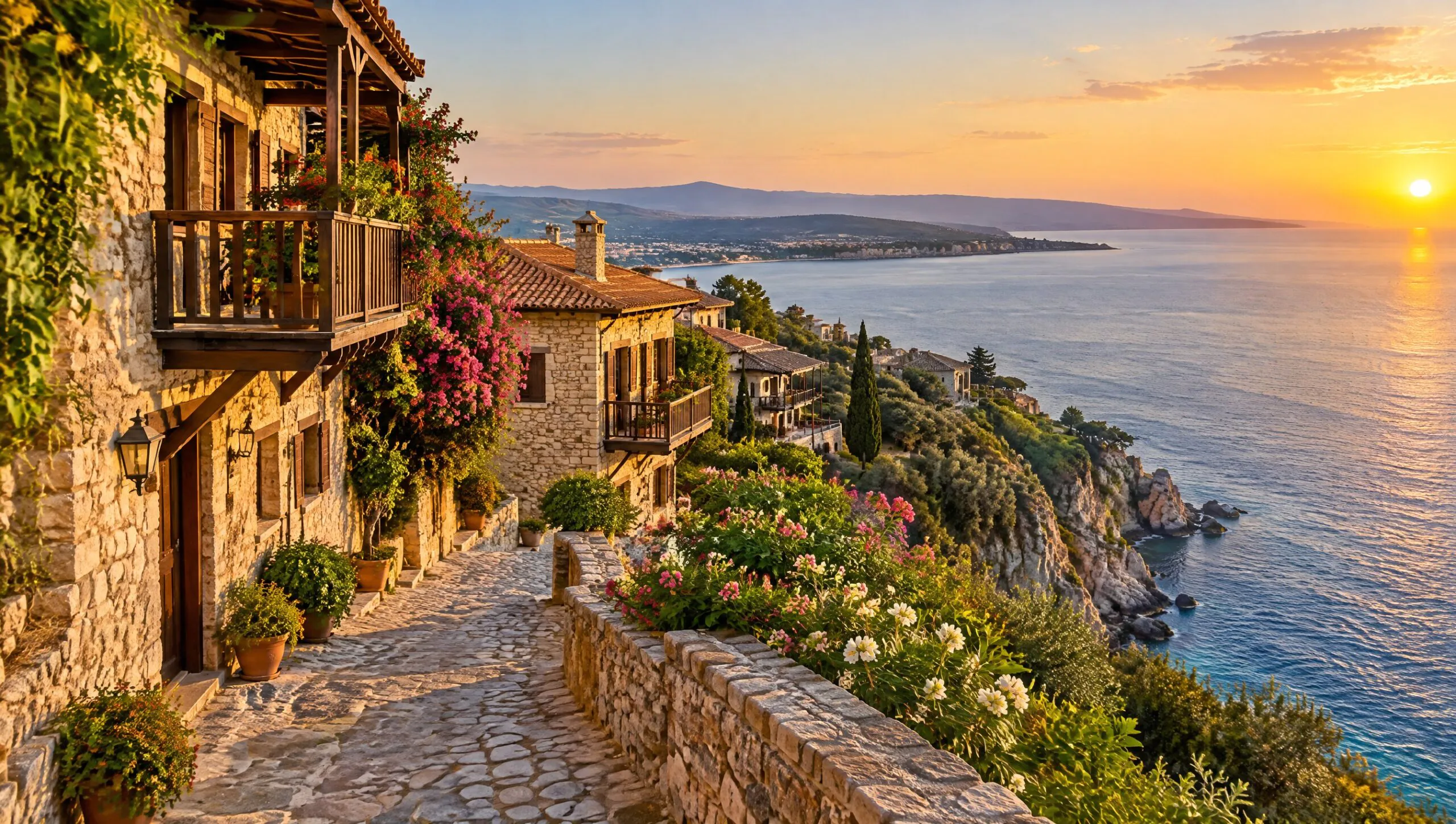
Kassandra, the western finger, is the developed one: Kallithea, Afytos, Sani, Pefkochori. It has the resorts, the marina and golf at Sani, the beach clubs and the shortest drive from the airport. Afytos, on the east coast of the peninsula, is a protected stone village on a cliff and the prettiest thing on it.
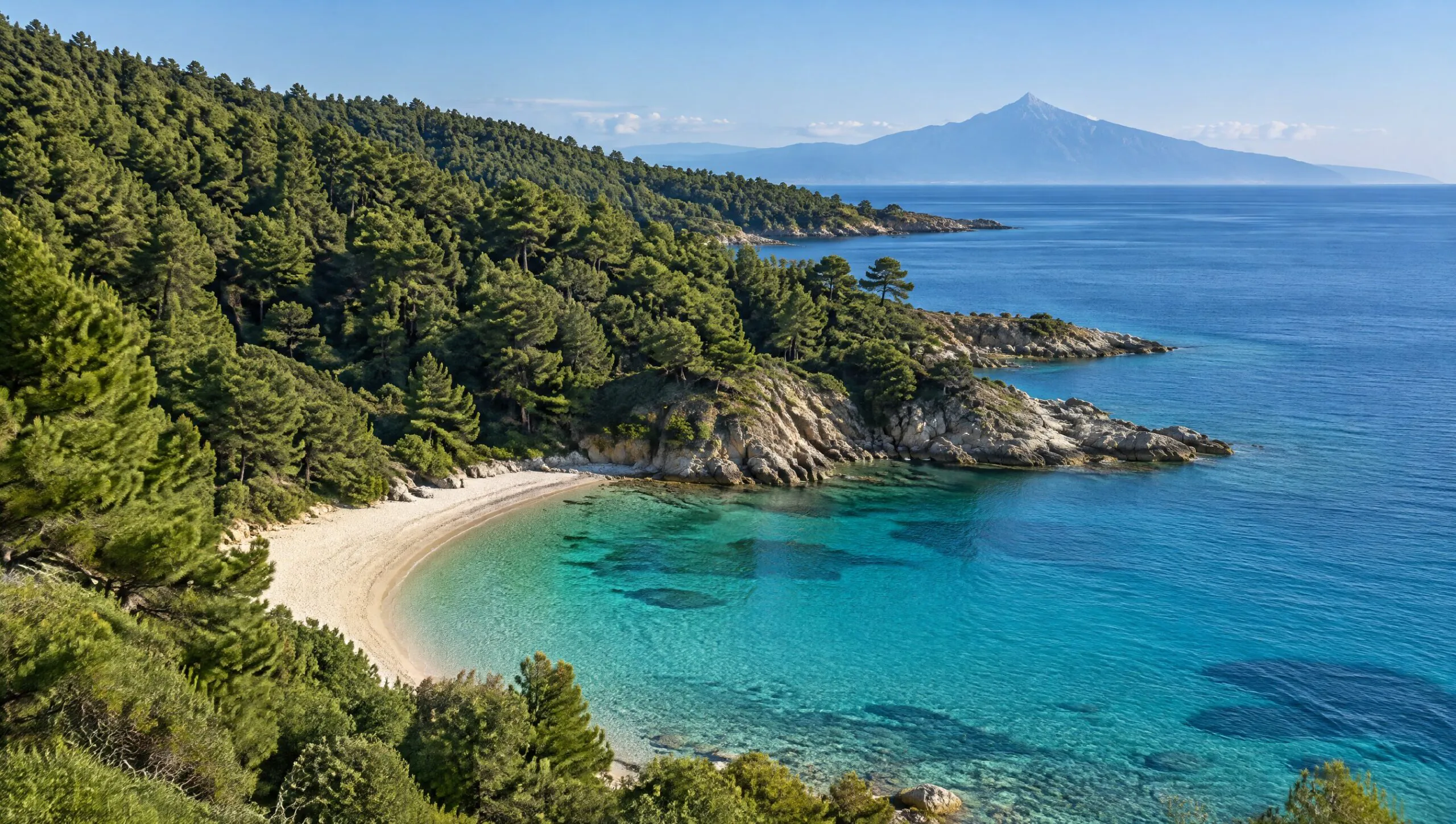
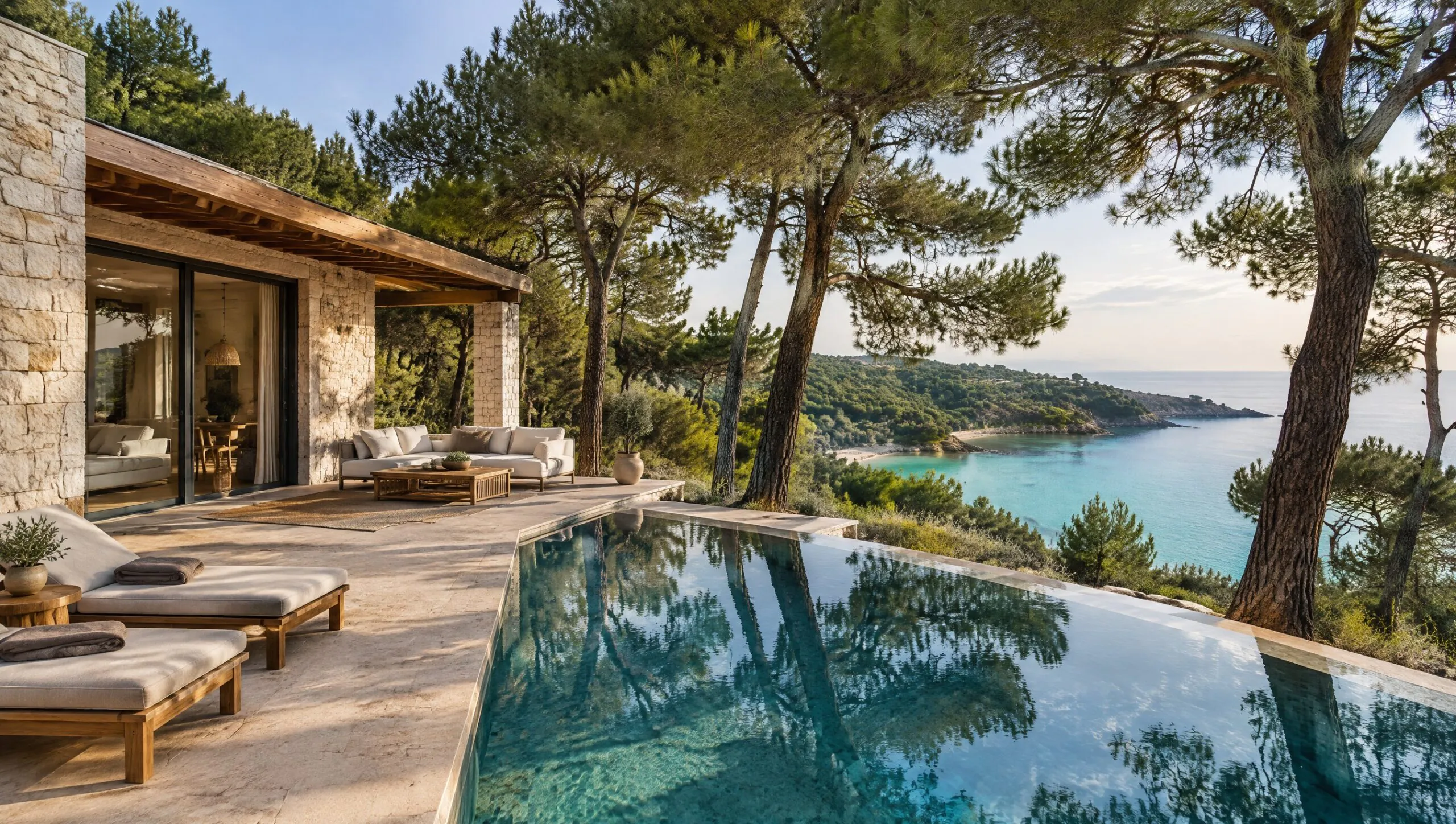
Sithonia, the middle finger, is the wooded one: pine forest down to the water, the island-scattered lagoon at Vourvourou, and Porto Koufo — the deepest natural harbour in Greece at around a hundred and ten metres, and sheltered enough that German submarines were stationed in it during the war. Nikiti sits at the neck of the peninsula, Neos Marmaras and Porto Carras anchor the west side, and the road round the eastern coast takes the better part of two hours and is worth every minute.
Behind both sits the mainland, with Mount Athos visible across the water on a clear day: a two-thousand-metre pyramid rising straight out of the sea.
The interior is worth knowing too. Polygyros, Arnaia and Taxiarchis sit in oak and chestnut country with stone houses, a climate several degrees cooler than the coast, and villages that stay open all winter.
An hour from an international airport
Thessaloniki airport is between forty-five minutes and an hour and a half from most of Halkidiki, depending on how far down the peninsula you go. It is a proper international airport with year-round connections across Europe, and it is the single biggest practical advantage this coast has over the islands.
The second advantage is the road. Halkidiki is drivable from Sofia in four hours, Belgrade in seven and Budapest in eleven, which is why a large part of the market here is central European and arrives by car. No ferry, no baggage limit, no seasonal flight schedule.
Which part of Halkidiki to choose
Sani. The north-west corner of Kassandra, built around the marina and the resort estate, with pine forest and a wetland behind it. The most expensive address in northern Greece, and the most international.
Afytos and Kallithea. The east coast of Kassandra, with a protected stone village on the cliff and long views across to Sithonia. The best combination of character and convenience on the peninsula.
Pefkochori and Chaniotis. Further south on Kassandra, with the busiest beaches and the most holiday stock. Straightforward to let, and the easiest part of Halkidiki to buy in without surprises.
Nikiti. The gateway to Sithonia, with a long sandy front, an old stone village on the slope above the road and the strongest year-round community on the peninsula. Seafront here is scarce and expensive — do not assume Sithonia is soft because it is wooded and quiet.
Vourvourou. The north-east of Sithonia, a shallow lagoon scattered with small islands and backed by pine. The most beautiful stretch in Halkidiki, the most tightly held, and priced accordingly.
Neos Marmaras and Porto Carras. The main town of Sithonia, with a marina, a golf course and a vineyard behind it. Good services, and asking prices around €2,900 per square metre — the most reasonable of the sought-after Sithonia addresses.
Porto Koufo and the south of Sithonia. A hidden harbour almost entirely enclosed by cliffs, and the emptiest coast on the peninsula. Cheaper land, longer drives.
Ouranoupoli and the Athos peninsula. The strip of coast before the monastic border, looking across to Athos itself. Quiet, atmospheric, and the best value sea view in Halkidiki.
Why buyers choose Halkidiki, and what the prices actually say
The usual claim about this coast is that it is cheap. It is worth being precise, because it is only half true. Average asking prices across Halkidiki reached about €2,759 per square metre in 2026, against roughly €4,060 across the Cyclades — so the region as a whole is materially cheaper than the Aegean islands.
The parts people actually want are not. Sithonia asks around €3,418 per square metre and rose almost twelve per cent in a year; Kassandra sits near €3,095. Sithonia now prices above Chania, above the Ionian average and well above the Cretan average. A genuine seafront villa at Nikiti or Vourvourou is a scarce, planning-constrained product, and scarcity rather than geography sets what it costs: these are priced against good island addresses, not against the Greek mainland. Anyone who tells you Sithonia seafront goes for a fraction of its island equivalent has not tried to buy one recently.
What you are buying instead is a different kind of ownership. Thessaloniki is an hour away — a real city with hospitals, universities and restaurants that do not close — which makes year-round use practical in a way most island coasts are not. The landscape is genuinely different too: pine forest meeting clear water rather than bare Aegean rock.
And the water is properly clean. Halkidiki took 93 Blue Flag beaches in 2026, more than any other regional unit in Greece — only Crete, as a whole region, has more, with 154.
The investment case, stated plainly
Halkidiki has the deepest domestic and Balkan demand of any Greek coast, and the Sani and Porto Carras investments have pulled the top of the market up over the last decade. Land is still available here, which is no longer true of much of the Cyclades.
The honest caution is the season, which is shorter. This is a northern coast: the water is swimmable from June to September rather than May to October, and the letting season is correspondingly tighter. Modelling an island yield here will disappoint you.
The second point is the buyer base. Resale demand is mostly Greek and Balkan rather than western European, which means a slower market and a different price expectation than Mykonos or Paros. It also means less exposure to a change of mood in northern Europe: through 2026 blended asking prices on Mykonos and Santorini actually softened by between one and six per cent, while Sithonia was still rising.
The third is more specific. The fastest growth has already happened in the best-known pockets. Sithonia at nearly twelve per cent in a year is not an undiscovered market, and paying 2026 Sithonia prices for a house that then needs 2026 Sithonia build costs is where buyers get hurt on this coast.
Questions we get about Halkidiki
Is Halkidiki in the lower Golden Visa band? Yes, and it is one of the strongest practical arguments for this coast. The €800,000 threshold covers Attica, the regional unit of Thessaloniki, Mykonos, Thira and every island with more than 3,100 inhabitants. Halkidiki is its own regional unit and falls outside all of it, so the €400,000 band applies, with a 120 m² minimum. The rules have been revised more than once, so we check the current text against the specific property before anyone relies on it.
Can a non-EU buyer purchase here? Parts of northern Greece are designated border zones where non-EU buyers need ministry approval. It is routinely granted and adds time; we establish the position before an offer.
How long does a purchase take? Eight to twelve weeks with clean title. Coastal land in Sithonia is often held by extended families, which is the usual cause of delay.
Is there an issue with forest land? Yes, and it matters here more than almost anywhere. Much of Sithonia is forest or reforestation-designated, where building is restricted or prohibited. The forest maps must be checked for every plot, and we do.
Can I use it in winter? Comfortably, yes — it is an hour from a city and the inland villages stay open. But the resorts close, and a seafront village in January is very quiet.
Buying in Halkidiki
Every property below has been seen by someone on our team. On this coast the decisive question is usually the forest map and the beach setback line, and we check both before anything is listed.
Browse what is available below, or tell us which peninsula you have in mind.
Currently for sale in Halkidiki
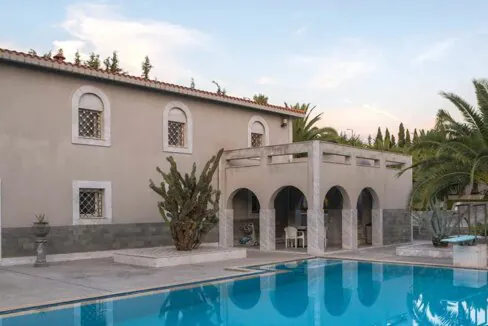 Golden Visa Eligible
 Golden Visa Eligible
 Golden Visa Eligible
 Golden Visa Eligible
 Homes for Sale GreeceAI concierge